
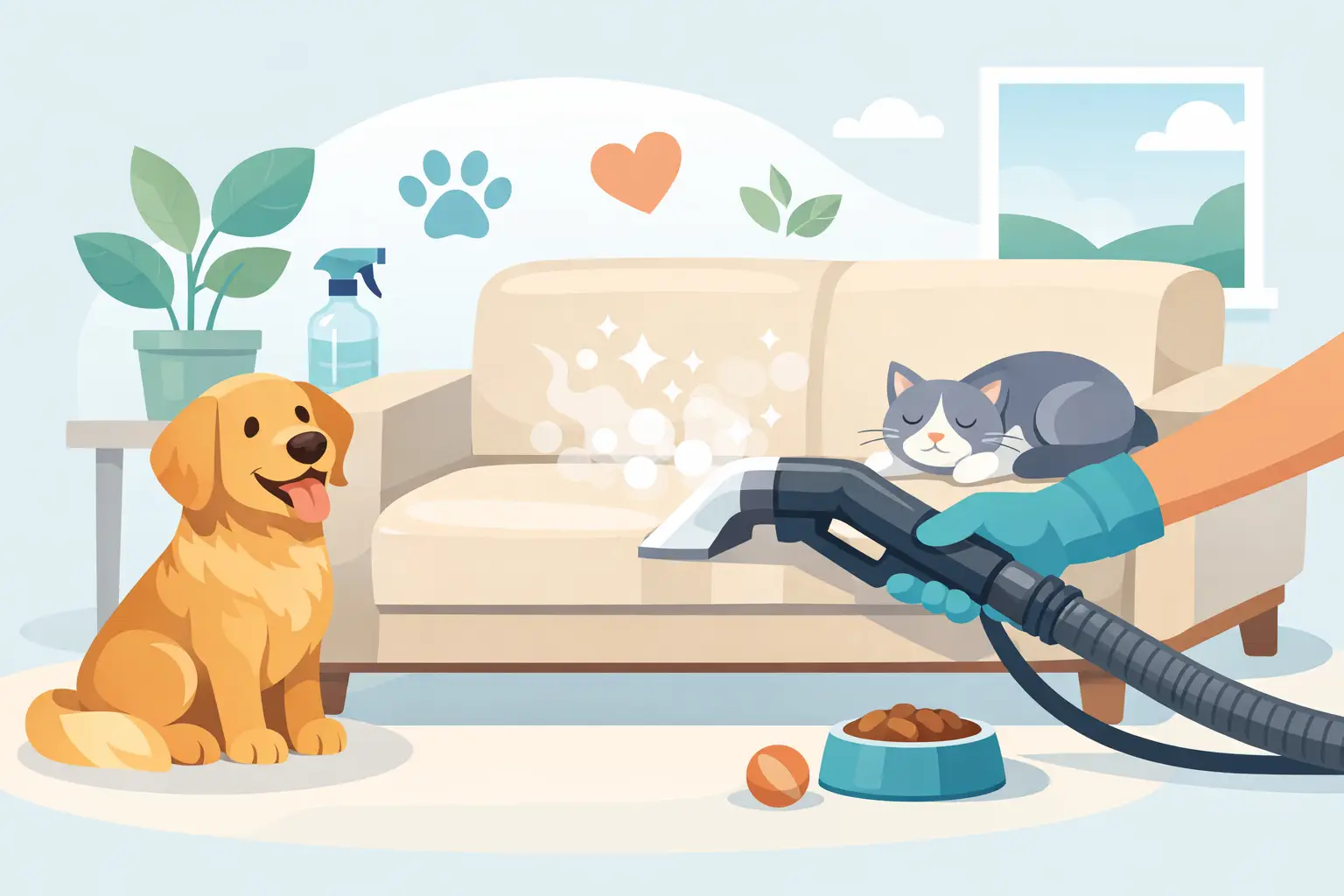
A dog settling into the corner of the sofa after a rainy walk or a cat claiming the favorite armchair can leave more behind than fur. Upholstery holds oils, dander, tracked-in soil, saliva, and the occasional accident deep in its fibers. Pet safe upholstery cleaning addresses those messes without replacing them with harsh chemical residues your family and pets may touch every day.
For homeowners in Wake, Durham, and Orange Counties, the goal is not simply making furniture look better for a few days. It is cleaning the fabric thoroughly while protecting the people and animals who use it most. That requires the right solution, the right amount of moisture, and an honest understanding of what the upholstery can handle.
What Pet Safe Upholstery Cleaning Really Means
A cleaning product is not pet safe just because the label uses words like green, natural, or fresh. The practical question is whether it can be used correctly on upholstered furniture without leaving behind irritating residues, heavy fragrances, or unsafe ingredients. Pets spend close to the surface, then groom themselves after lying on it. That makes residue removal and proper drying just as important as the cleaner itself.
A responsible process starts with identifying the fabric and its manufacturer care code. Cotton, linen, microfiber, wool, velvet, and synthetic blends do not react the same way to water or cleaning solutions. Using too much water on the wrong fabric can create water rings, shrinkage, color bleeding, or a lingering damp odor. A careful technician tests an inconspicuous area first instead of treating every sofa like it needs the same approach.
The cleaning method should also target the source of the problem. Surface deodorizer may cover an odor for a short time, but it will not remove the organic material feeding that odor. For pet accidents, an appropriate enzyme-based treatment can help break down odor-causing residue before the upholstery is cleaned and extracted. For dander and everyday soil, gentle agitation and thorough extraction are often more useful than a strong fragrance.
Why Harsh Products Can Create New Problems
Many store-bought upholstery sprays are designed for a quick visual result. They may leave a scent that feels clean, but strong perfumes can be unpleasant for pets and sensitive household members. Some products can also leave a sticky film that attracts more soil, causing a clean cushion to look dingy again sooner than expected.
Bleach, ammonia, and aggressive spot removers are particularly risky choices for upholstery. They can damage dyes and fibers, and mixing household products can create unsafe fumes. Even products marketed for pet messes need to be used according to their directions. More solution is not better. Overwetting a cushion or failing to rinse and extract the area can trap residue below the surface.
This does not mean every stain can be removed with the mildest possible product. Older urine stains, deeply embedded oils, and heavily soiled furniture may need targeted treatment. The trade-off is choosing the least aggressive effective method, then removing as much moisture and solution as possible. Good cleaning protects both the fabric and the home environment.
Odor Removal Requires More Than a Cover-Up
Pet odors tend to become more noticeable when humidity rises, which is familiar to many North Carolina homeowners. Moisture can reactivate residue that was never fully removed, especially in cushion inserts, fabric backing, or padding. If the odor returns after a room gets warm, the source may be deeper than the visible spot.
Professional cleaning can improve many of these situations, but expectations should stay realistic. A recent accident on a removable cushion is usually easier to treat than an old, repeated problem that has reached foam or the furniture frame. In severe cases, cleaning the fabric alone may not completely eliminate the odor. An honest provider should explain that possibility upfront rather than promise a result the furniture cannot support.
The Right Way to Handle a Fresh Pet Accident
Fast action matters, but scrubbing is usually the wrong move. Rubbing pushes moisture and stain material deeper into the fabric while roughening the fibers. Instead, blot the area with clean white towels or paper towels, applying steady pressure and replacing them as they become wet.
Avoid steam, high heat, and heavily scented sprays on a fresh urine spot. Heat can set certain stains and may make odor removal more difficult. Once you have blotted the surface, use only a fabric-appropriate pet stain treatment if you know the upholstery care code and can test a hidden area. Let the furniture dry fully before allowing pets back on it.
If the spot has soaked through the cushion, a surface treatment may not be enough. The cushion can feel dry on top while moisture remains inside. That is a good time to schedule professional help, especially if an odor appears later or the same location is repeatedly soiled.
What Professional Cleaning Should Include
Professional upholstery care should feel clear and methodical, not mysterious. Before work begins, you should receive a straightforward assessment of the fabric, visible staining, odor concerns, and likely results. A reliable cleaner will explain the recommended method and any limitations, such as permanent color loss, prior damage, or stains that have set over time.
The appointment typically includes pre-inspection, fabric testing, dry soil removal, targeted spot treatment, gentle cleaning, extraction or low-moisture removal, and grooming when appropriate. Thorough drying is part of the service, not an afterthought. Faster drying helps prevent musty smells and gets your furniture back in use sooner.
Ask what cleaning solutions will be used in your home and whether they are non-toxic and low-residue. You do not need a chemistry lesson, but you deserve a direct answer. Transparent pricing matters, too. The quote should state what is included and identify potential add-ons before the work starts, not after your furniture is already being cleaned.
Choosing a Pet Safe Upholstery Cleaning Service
The best provider for a pet household is not necessarily the one offering the lowest advertised price. A low starting price can change quickly if odor treatment, cushions, sectional pieces, or stain removal are introduced as surprise charges. Look for a company that provides clear estimates and sets realistic expectations before the appointment.
Experience with upholstery is essential because furniture fabrics are less forgiving than many carpets. Ask whether the team inspects labels and tests materials before cleaning. Also ask how they handle pet urine, whether they use heavy fragrances, and how long the furniture may need to dry. Clear answers are a strong sign that the company has a process rather than a one-size-fits-all approach.
For families seeking all-natural, non-toxic cleaning options, RestorePro Cleaning Services focuses on household-safe care, transparent upfront pricing, and results backed by a satisfaction guarantee. That combination matters when the couch is where your child reads, your dog naps, and your family gathers at the end of the day.
Keeping Upholstery Cleaner Between Appointments
Regular care can extend the results of professional cleaning. Vacuum upholstered furniture weekly with an upholstery attachment, paying attention to seams, creases, and under removable cushions where pet hair and dander collect. If your pet spends a lot of time on one piece of furniture, washable throws can protect high-use areas without forcing you to cover the entire room.
Address spills promptly, rotate and fluff cushions when the manufacturer allows it, and keep pets groomed to reduce the oils and loose hair transferred to fabric. These habits will not eliminate every accident or odor, but they can reduce buildup and make deeper cleaning more effective.
A clean sofa should not come with a chemical smell, a damp feel, or uncertainty about what was used on it. The best result is simpler: furniture that looks refreshed, feels comfortable, and remains a safe place for every member of the household to settle in.