When a homeowner asks about air duct and dryer vent cleaning equipment, they are usually asking a bigger question: what kind of tools are being brought into my home, and will they actually solve the problem without making a mess of it? That is a fair question. The equipment matters because it affects how thoroughly dust, lint, and debris are removed, how clean the process stays, and whether the service feels careful or careless.
For families in Wake, Durham, and Orange Counties, this is not just a maintenance issue. It is about air quality, safety, and trust. If you have kids, pets, allergies, or an older home that seems to collect dust no matter how often you clean, the right equipment can make a real difference. The wrong setup can leave debris behind, stir contaminants into the air, or turn a straightforward job into a sales pitch.
What air duct and dryer vent cleaning equipment actually does
At a basic level, this equipment is designed to remove buildup from places you cannot easily reach. In air ducts, that means dust, pet hair, pollen, and other debris that can settle inside the system over time. In dryer vents, it means lint and blockages that restrict airflow and raise the risk of overheating.
The process is not one-size-fits-all. A single-story home with newer ductwork may need a different approach than an older home with long duct runs, multiple returns, or signs of moisture issues. The same goes for dryer vents. A short, straight vent behind the laundry room is simpler to clean than a long vent line with turns or an exterior termination hood packed with lint.
That is why good equipment is not just about power. It is about control, access, and using the right tool for the actual layout of the home.
The core equipment used in duct and vent cleaning
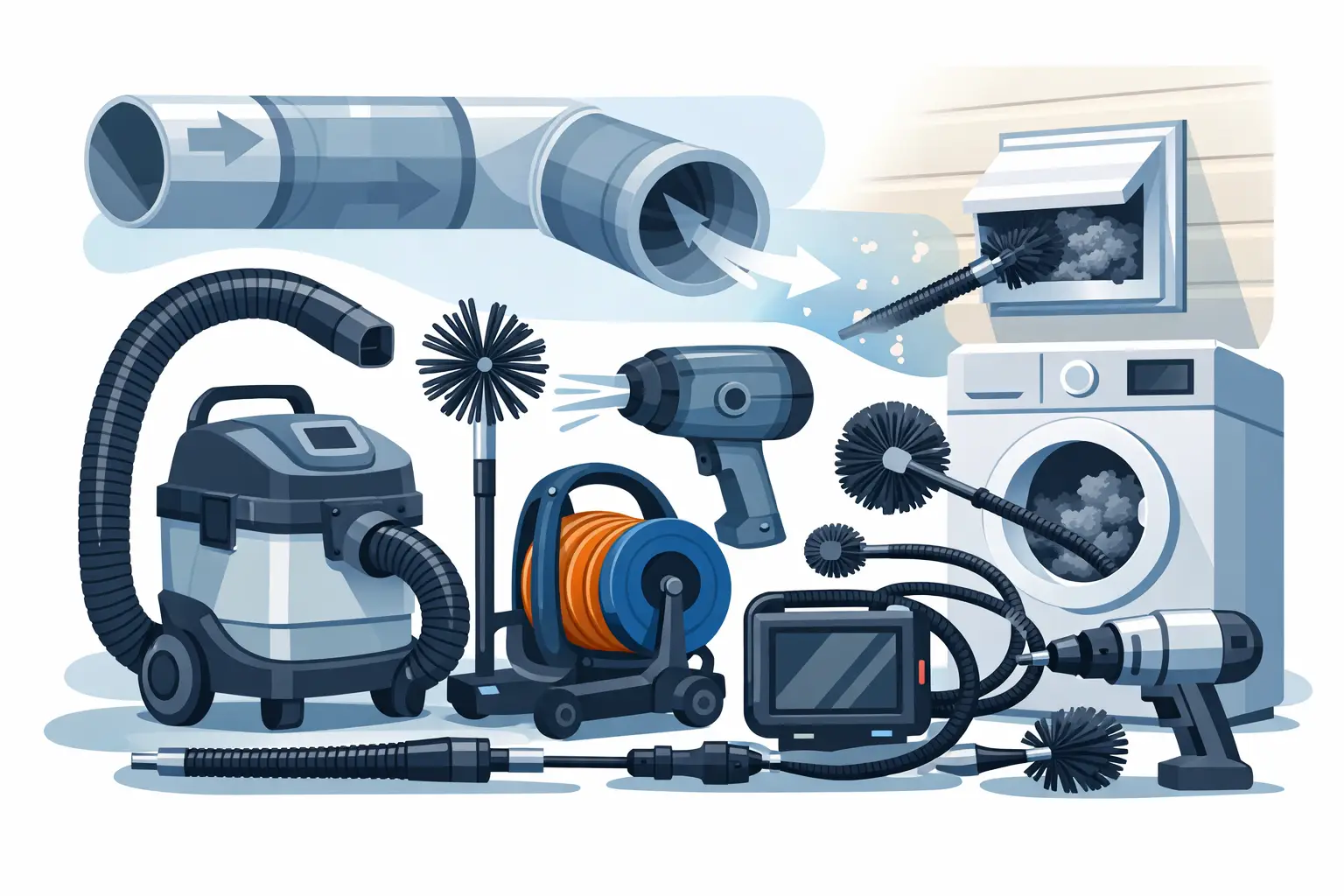
Professional air duct cleaning usually starts with a high-powered vacuum collection system. This creates negative pressure inside the ductwork so loosened debris is pulled out rather than blown into the living space. That part is important. Homeowners should not have to worry that cleaning will send dust back through the house.
Alongside the vacuum system, technicians often use agitation tools to break debris loose from the interior surfaces of the ducts. These may include rotating brushes, air whips, skipper balls, or compressed air tools designed to reach deep into the runs. The best choice depends on the duct material and condition. For example, aggressive brushing may be fine for some metal ductwork but not ideal for more delicate sections.
Dryer vent cleaning equipment is a little different. The goal is to remove compacted lint safely and completely without damaging the vent line. That often involves specialized rotary brushes, flexible rods, air tools, and vacuums built to pull lint from long vent paths. In some cases, inspection tools are also used to identify crushed sections, disconnected joints, or heavy clogs.
Some companies also use cameras or visual inspection tools for both services. These are useful when there is a question about buildup, damage, or restricted airflow. They can help confirm what is happening inside the system instead of asking homeowners to simply take someone’s word for it.
Why the vacuum system matters so much
If there is one piece of air duct and dryer vent cleaning equipment that affects the quality of the job most, it is the vacuum collection system. Strong suction is what keeps debris moving out of the system instead of floating into rooms, settling on furniture, or staying trapped in the ductwork.
That said, bigger is not always better in a simple marketing sense. What matters is whether the equipment is appropriate for residential work and used correctly. A technician still needs to seal access points properly, manage airflow, and clean each section methodically. Powerful equipment in careless hands does not produce careful results.
For homeowners, this comes back to transparency. A trustworthy company should be able to explain its process in plain language. You should not need a technical background to understand how your home will be protected during cleaning.
Not all agitation tools are equal
This is where experience really shows. Different duct systems require different cleaning methods, and the equipment should match the material. Metal ducts can usually handle more aggressive mechanical cleaning than flexible duct or lined ductwork. Using the wrong brush or too much force can do more harm than good.
That is one reason low-price offers can be risky. If a provider treats every home exactly the same, the equipment may not be adjusted to your system. A rushed crew may rely on the fastest method instead of the safest one. Homeowners often do not see that part of the work, which makes it even more important to choose a company that values careful service over cutting corners.
Dryer vents have a similar issue. Lint can pack tightly in elbows and long runs, and some tools work better than others depending on the vent design. A proper cleaning should improve airflow, not just remove a visible clump near the dryer connection.
Good equipment supports cleaner, safer results
For air ducts, the main benefit is cleaner circulation. If dust and debris are sitting inside the system, every heating or cooling cycle can move some of that material through the home. Cleaning does not solve every indoor air quality issue, but it can reduce one source of buildup, especially in homes with pets, recent renovations, or years of settled dust.
For dryer vents, the safety benefit is even more immediate. Lint buildup restricts airflow, forces the dryer to work harder, and can contribute to overheating. If clothes are taking longer to dry, the laundry room feels unusually warm, or you notice a musty or burnt smell, the vent may already be overdue for service.
The equipment itself is not the full solution. It is the combination of proper tools, proper technique, and a clear process. But when those pieces come together, the result is a home that feels cleaner, runs more efficiently, and carries fewer hidden risks.
What homeowners should ask before booking
You do not need to ask for a full equipment inventory, but it helps to ask a few practical questions. Will the company use negative pressure or vacuum containment for duct cleaning? How do they protect the home during service? What tools do they use for dryer vent cleaning, especially if the vent run is long or hard to access? Can they explain the difference between a quick surface cleaning and a full cleaning process?
The answers should be clear and calm. If the explanation sounds vague, overly technical, or designed to push you into extra services, that is a warning sign. Honest providers do not need scare tactics. They should be able to tell you what they are doing, why they are doing it, and what you can reasonably expect when the job is finished.
Equipment matters, but so does the service mindset
A clean truck full of tools does not automatically mean quality work. In residential service, the best equipment is only part of the picture. Homeowners also need respect for their space, straightforward pricing, and confidence that no one is trying to turn a needed cleaning into a high-pressure upsell.
That is especially true when the work relates to health and safety. Families want to know the service is being done carefully. They want technicians who understand the home is not a job site first – it is where children sleep, where pets rest, and where people expect to breathe easier, not worse, after a visit.
At RestorePro Cleaning Services, that mindset matters just as much as the tools. The goal is not to impress homeowners with jargon. It is to deliver careful, effective service with honest communication, family-safe practices, and no hidden fees.
When professional equipment is worth it
Some homeowners try store-bought attachments or DIY kits, especially for dryer vents. A basic kit may help with light buildup near the opening, but it often will not reach the full vent line or address hidden restrictions. Air ducts are even more difficult to clean properly without professional-grade equipment and training.
That does not mean every home needs frequent service. It depends on the age of the home, the number of pets, allergy concerns, renovation dust, and how the systems have been maintained. But when there are clear signs of buildup or poor airflow, professional equipment is usually the difference between partial cleanup and a job done thoroughly.
The best approach is simple: ask questions, expect straight answers, and choose a provider that treats your home with care. Good equipment should support a cleaner process, not distract from it. When the tools and the service are both right, your home feels the difference in ways that matter every day.