
A few dark spots around a bathroom vent or beneath a kitchen sink can feel manageable. Sometimes they are. But mold is not just a cleaning problem – it is usually a moisture problem first. Knowing how to remove mold safely means protecting your family from unnecessary exposure, preventing spores from traveling through the home, and fixing the damp condition that allowed mold to grow.
For Triangle homeowners, humidity, heavy seasonal rain, crawl spaces, and slow plumbing leaks can all create the conditions mold needs. The goal is not to panic over every speck. It is to make a clear decision about what you can safely handle and when the job calls for trained help.
Start by Deciding Whether It Is a DIY Job
Small, visible patches of mold on hard, nonporous surfaces are often appropriate for careful household cleaning. Think of a limited area on bathroom tile, a window sill, or a painted surface near a minor leak that has already been repaired. A commonly used rule of thumb is that a mold area smaller than about 10 square feet may be manageable for a homeowner, provided there is no sign of a larger hidden problem.
The size of the visible spot is not the only consideration. Mold behind drywall, under flooring, inside insulation, or in a crawl space is a different situation. So is mold following a sewage backup, major flood, or long-term water damage. Porous materials can hold mold below the surface, where wiping will not solve the problem.
Call a qualified mold professional if the affected area is extensive, returns after cleaning, has a strong musty odor without an obvious source, or appears connected to a leak or water-damaged building material. Professional help is also the safer choice when anyone in the household has asthma, severe allergies, a weakened immune system, or other respiratory concerns.
How to Remove Mold Safely From Small Surface Areas
Before cleaning, stop the source of moisture. Repair the dripping pipe, address the roof or window leak, run the bathroom exhaust fan, or reduce excess humidity. Cleaning mold without correcting the moisture issue is temporary at best. If the surface stays damp, mold has a good chance of returning.
Keep children, pets, and anyone with respiratory sensitivities out of the work area. Close interior doors to limit foot traffic, but ventilate the space to the outdoors when possible by opening a window or using an exhaust fan that vents outside. Do not point a portable fan at the mold. Air movement can spread loose spores into other parts of the room.
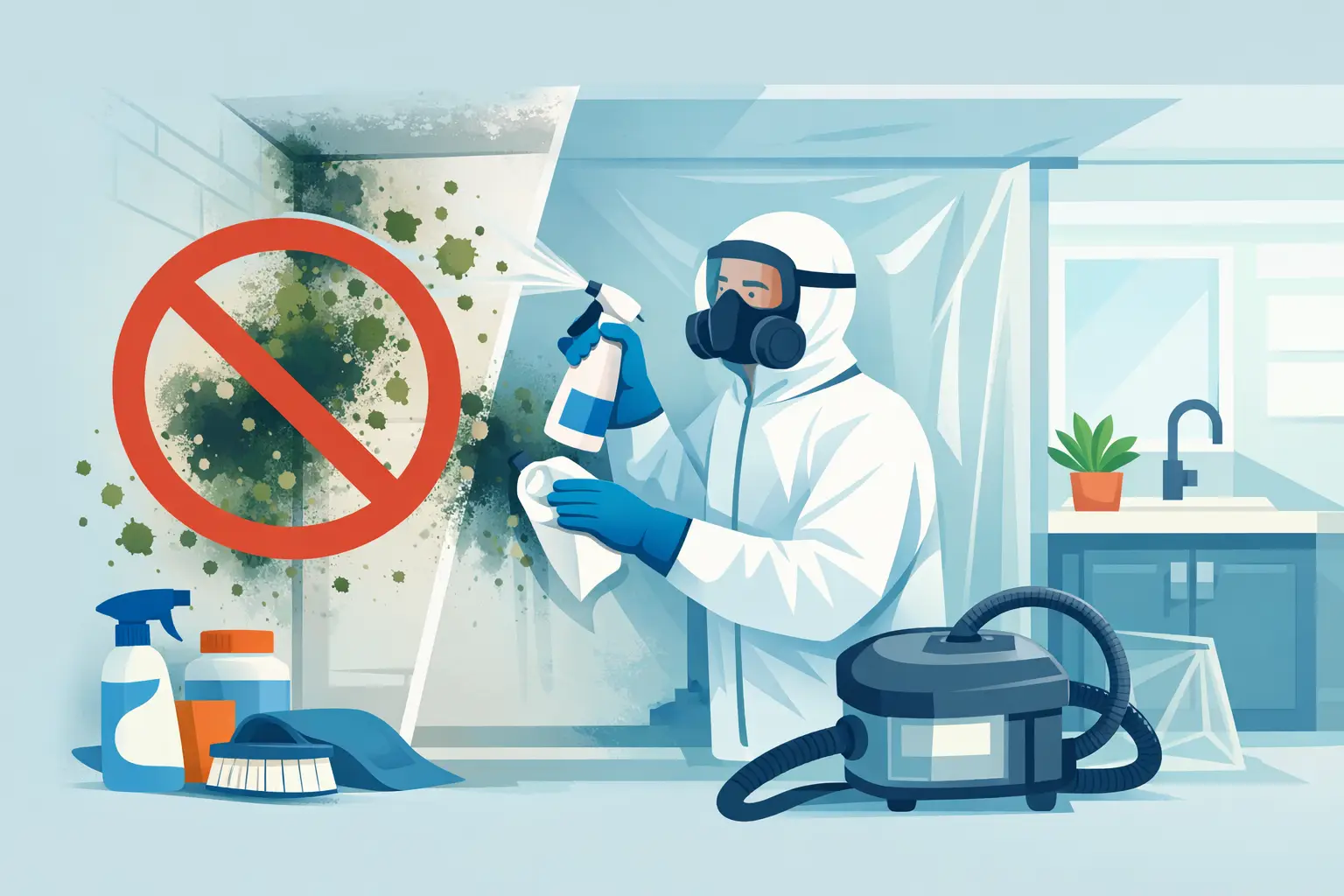
Wear basic protective gear before you begin: disposable gloves, protective eyewear, and at least an N95 mask. Wear clothing you can wash promptly afterward. This is a simple precaution that can make a meaningful difference, especially when you are working in a tight bathroom or under a sink.
For a small area on tile, glass, metal, sealed countertops, or another hard surface, use a mild, non-toxic cleaner designed for the material, or warm water with a small amount of dish soap. Scrub gently with a disposable cloth or sponge, then rinse the surface as needed and dry it completely. The physical action of cleaning and thorough drying matter more than using a harsh-smelling product.
Avoid mixing cleaning products. In particular, never combine bleach with ammonia, vinegar, or other cleaners. Those combinations can create dangerous fumes. Bleach is also not a reliable answer for every mold issue, especially on porous materials where it may not reach growth beneath the surface. Strong chemicals can add another indoor air quality concern without fixing the underlying problem.
Place used disposable cloths, sponges, gloves, and similar materials in a sealed bag before putting them in the trash. Wash reusable clothing separately in hot water when the care label allows, then wash your hands thoroughly. Once the area is clean, keep checking it over the next several weeks. A returning spot is a signal that moisture remains or that mold is growing out of sight.
Do Not Try to Save Every Moldy Item
Some materials cannot be safely cleaned once mold has grown into them. Wet insulation, ceiling tiles, untreated drywall, particleboard, and heavily affected carpet padding often need to be removed and replaced. The same may be true for upholstered furniture, mattresses, or sentimental paper items with widespread growth.
That does not mean every item with a surface spot is ruined. A solid wood table, for example, may be salvageable if the mold is limited to the finish and the piece can be fully dried. It depends on the material, the extent of growth, and whether there is a persistent odor after cleaning. When in doubt, avoid dragging a moldy item through clean areas of the home. Cover it before moving it and ask a professional about the safest next step.
Watch for Signs Mold Is Hiding
Visible mold is only part of the picture. Pay attention to repeated musty odors, peeling paint, warped baseboards, bubbling drywall, stains that keep growing, or rooms that feel persistently damp. These clues can point to moisture behind a wall, below a floor, around ductwork, or in a crawl space.
Bathrooms, laundry rooms, basements, attics, and areas around HVAC equipment deserve regular checks. In North Carolina homes, crawl spaces can be especially vulnerable when outside humidity and ground moisture are not well controlled. Condensation around air registers or on windows may also indicate that indoor humidity is too high.
Do not ignore mold around air vents or inside an HVAC system. A dusty vent cover can be cleaned, but visible mold near ductwork may indicate a moisture issue that needs investigation. Running the system before addressing that issue can move particles and odors throughout the home.
Prevent Mold From Coming Back
A clean surface will only stay clean if the home stays dry. Aim to keep indoor humidity in a comfortable range, generally below 50 percent when practical. A dehumidifier can help in damp areas, but it should be emptied and maintained regularly so it does not become another source of moisture.
Use bathroom exhaust fans during showers and for a while afterward. Run the kitchen exhaust when cooking creates steam. Dry wet bath mats, towels, and shower walls instead of leaving them bunched up, and address plumbing drips as soon as you notice them. After heavy rain, inspect windows, ceilings, and exterior-facing walls for new stains or dampness.
Good airflow helps, but airflow alone is not a cure. If a closet, basement corner, or crawl space remains damp, the answer may involve a leak repair, insulation correction, drainage improvement, or ventilation assessment. Honest mold care means identifying that root cause rather than repeatedly spraying the same area.
When Professional Mold Removal Is the Safer Choice
Professional removal is not about selling a bigger service than you need. It is about containing the affected area, removing damaged materials safely when necessary, and helping you understand why the problem developed. For a hidden or recurring issue, that approach can prevent a small patch from becoming a costly repair.
A reputable provider should explain the scope in plain language, identify what is included, and give you clear pricing before work begins. Be cautious of anyone who uses fear to push immediate, open-ended work or promises to solve a moisture problem without first locating its cause. Your home deserves a solution that protects indoor air quality, not a temporary cover-up.
If you are unsure whether a spot is safe to clean yourself, pause before scrubbing. A straightforward assessment can help you protect your home, your belongings, and the people who live there. RestorePro Cleaning Services is here for homeowners who want family-safe, transparent care when mold concerns need more than a surface clean.