

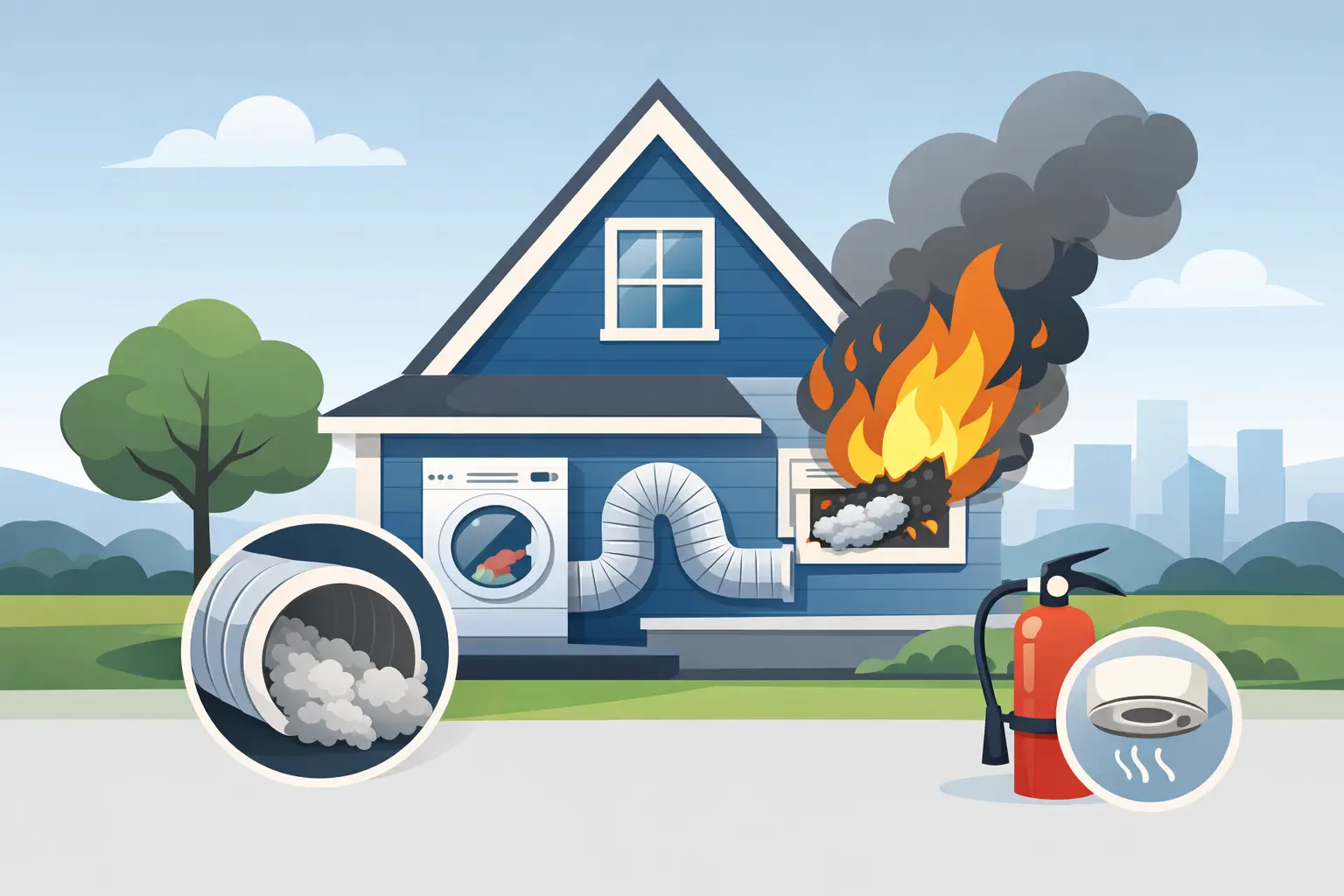
A dryer that takes two or three cycles to finish a load is not just frustrating. It can be a warning that heat, moisture, and lint are getting trapped where they should not. Effective dryer vent fire prevention starts with paying attention to those small changes before they become a costly repair, a moisture problem, or a serious safety concern.
For homeowners in Wake, Durham, and Orange Counties, a clean dryer vent is a practical part of caring for a healthy home. It helps the dryer move hot air outdoors efficiently, protects the appliance from unnecessary strain, and reduces the chance that accumulated lint can ignite.
Why Dryer Vents Become a Fire Risk
Every load of laundry produces lint, even when you clean the screen after each cycle. The lint screen catches a large amount, but fine fibers still move past it and enter the ductwork. Over time, those fibers can collect along turns in the vent line, at connection points behind the dryer, or at the exterior vent hood.
The risk rises when airflow is restricted. A blocked or crushed vent forces the dryer to run hotter and longer. That extra heat can affect lint buildup, the dryer itself, and nearby materials. Long vent runs, sharp bends, older flexible ducts, and a vent outlet blocked by debris can all contribute to the problem.
This does not mean every slow dryer has a dirty vent. A failing heating element, moisture sensor, blower, or door seal can also affect performance. Still, checking the vent path is one of the smartest first steps because it addresses both safety and efficiency.
Warning Signs Your Dryer Vent Needs Attention
A dryer vent rarely announces a blockage all at once. More often, homeowners notice gradual changes in drying time, room temperature, or outdoor airflow. Watch for these signs:
- Clothes need more than one cycle to dry, especially towels, jeans, or bedding.
- The laundry room feels unusually warm or humid while the dryer is running.
- The outside vent hood has weak airflow, or its flap does not open during a cycle.
- You notice a hot, musty, or burning smell near the dryer.
- Lint is collecting around the dryer, behind the appliance, or near the exterior vent opening.
A burning odor deserves immediate attention. Turn off the dryer, allow it to cool, and do not keep running loads to see whether the smell goes away. If you see smoke or suspect an active fire, leave the home and call emergency services.
Dryer Vent Fire Prevention Starts With Everyday Habits
The small habits matter because they reduce the amount of fuel and heat that can build up between professional cleanings. Clean the lint screen before every load, not only when it looks full. A screen can appear fairly clear while its fine mesh is coated with residue from dryer sheets or fabric softeners.
Wash the lint screen occasionally with warm water and a soft brush, then let it dry completely before reinstalling it. If water pools on the screen instead of passing through, residue may be limiting airflow. This simple step can improve drying performance without adding chemicals to your laundry routine.
Avoid overloading the dryer. Large, tightly packed loads do not tumble well, which holds moisture in the fabric and extends drying time. Separate heavy items from lighter loads when possible. It may take an extra load, but it can be easier on the appliance and reduce repeated high-heat cycles.
Also, stay home while the dryer is running when you can. Running a dryer overnight or while everyone is out removes the opportunity to notice a new odor, unusual noise, or overheating issue quickly. This is especially worth considering in busy households where laundry often runs back-to-back.
Keep the Outdoor Vent Opening Clear
The exterior vent hood is the final exit point for heat, moisture, and lint. Check it regularly, particularly after storms, landscaping work, or seasonal pollen buildup. The flap should open freely while the dryer runs and close when it is off.
Do not cover the vent opening with screening that traps lint. Bird guards and similar accessories may seem helpful, but some designs can restrict airflow if they are not made for dryer exhaust. If pests or debris are a recurring issue, ask a qualified professional about an appropriate vent hood rather than improvising a cover.
Choose Safe Vent Materials and Connections
What is behind the dryer matters as much as what is visible. Dryer exhaust should travel through properly installed metal ducting that can handle heat and allows lint to move through the line. Thin plastic or vinyl duct material can sag, tear, and hold lint. Flexible foil-style ducts can also crush easily and create ridges where debris accumulates.
A short, properly rated transition connector may be needed between the dryer and the wall connection, depending on the setup. The key is that it should not be kinked, crushed, or stretched into a long looping path. Pushing the dryer too close to the wall is a common cause of damaged connections.
The best configuration depends on the home. A first-floor laundry room with a short, straight route outside is generally easier to maintain than a laundry closet venting through a long attic, crawlspace, or roof route. Homes with longer or more complex vent runs may need cleaning more often. Building requirements can vary, so repairs or rerouting should be handled by a qualified technician who can assess the full system.
How Often Should a Dryer Vent Be Cleaned?
For many households, a professional dryer vent cleaning every year is a sensible baseline. However, the right schedule depends on how much laundry your household produces, the number of pets shedding in the home, the length and layout of the vent, and how well the dryer is performing.
A family with children, frequent towel loads, or pet bedding may create more lint than a one- or two-person household. Likewise, a vent with several bends can collect debris faster than a short straight line. If drying times are increasing before the one-year mark, do not wait simply because the calendar says it is too soon.
Professional cleaning should address more than the lint screen area. The service should remove lint from the full accessible vent path, inspect the connection behind the dryer, and check whether air is moving properly at the exterior outlet. Clear communication matters here. You should understand what is being cleaned, what was found, and whether any repair is actually needed before agreeing to extra work.
RestorePro Cleaning Services helps Triangle homeowners address dryer vent buildup with straightforward service, clear expectations, and a focus on the safer, healthier home environment families want.
Do Not Ignore Moisture and Performance Problems
A restricted dryer vent does more than raise fire concerns. When humid air cannot exhaust outdoors, it can linger in the laundry area or nearby wall cavities. Over time, that moisture can contribute to stale odors and conditions that are less comfortable for your home.
Long drying cycles also increase energy use and wear on clothing. Heat can be particularly hard on elastic fabrics, towels, and everyday items that already see frequent washing. Cleaning the vent will not solve every dryer problem, but it often removes one preventable source of wasted time, energy, and appliance strain.
If a dryer still performs poorly after the vent is cleaned, the next step may be appliance service. That is not a failure of the cleaning process. It is useful information that helps you avoid replacing an appliance or repeatedly running extra cycles without identifying the real cause.
A clean vent is one of those quiet home maintenance tasks that rarely gets attention until something goes wrong. Giving it attention now helps your dryer do one simple job safely: move warm, moist air out of your home and let your laundry routine stay uneventful.