
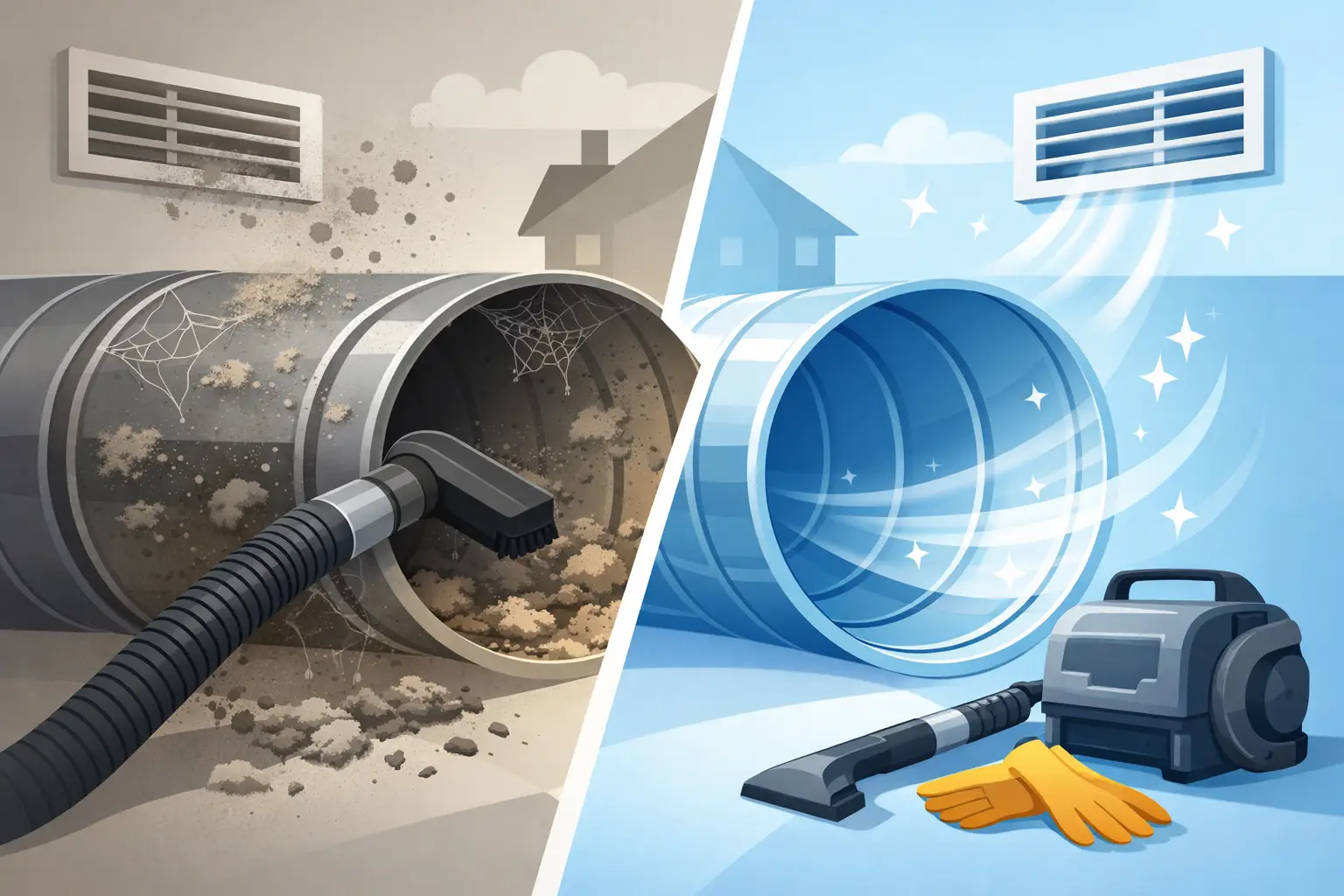
A return vent covered in gray dust is easy to see. What homeowners cannot always see is the buildup farther inside the ductwork: fine household dust, pet dander, pollen, and debris that has collected over time. That is why air duct cleaning before and after can look different from one home to the next. The real change is not always a dramatic photo. Often, it is a cleaner HVAC pathway and a more comfortable home.
For families in Wake, Durham, and Orange Counties, duct cleaning is usually about more than appearances. It is about reducing a source of circulating dust, addressing lingering odors, and caring for the air shared by children, pets, and guests. A professional service should make that process clear, safe, and free from surprise charges.
What Air Duct Cleaning Before and After Really Means
Before cleaning, a home may have visible dust around supply vents, dark residue on return grilles, or debris near accessible duct openings. Homes with shedding pets, recent renovations, older HVAC systems, or frequent open windows often collect more material than expected.
Inside the ducts, buildup tends to settle in low points, turns, and return-side components. Every heating or cooling cycle can move some loose particles through the system. That does not mean every dusty home has severely contaminated ducts, and it does not mean duct cleaning is a cure for allergies or medical conditions. It means the system may have a cleanable source of household debris that deserves attention.
After a thorough cleaning, the most meaningful difference is that accessible ducts, returns, registers, and HVAC components have less accumulated debris. You may also notice less dust settling near vents, a fresher smell when the system starts, or fewer particles coming from a register. Results depend on the condition of the system, the home’s filtration, the number of pets, and what is happening outside the ductwork.
What You May Notice Before Service
A few signs can help you decide whether it is time to schedule an inspection or cleaning. One sign alone does not prove the ducts are the problem, but a pattern is worth investigating.
You may notice dust returning quickly after routine cleaning, especially around return vents and supply registers. Pet hair and dander can build up faster in homes with dogs or cats. After a remodeling project, drywall dust, sawdust, and other fine debris can travel farther through a home than expected.
Odors are another common concern. A stale smell when the heat or air conditioning starts may come from ductwork, but it can also come from a dirty filter, a drain issue, damp materials, or something inside the HVAC equipment. An honest provider should not assume every odor calls for duct cleaning. The source should be evaluated before anyone promises a result.
Some homeowners also see dust streaks around vents or find that certain rooms feel stuffier than others. Cleaning may help if debris is affecting airflow at a register, but it will not fix undersized ductwork, disconnected ducts, poor insulation, or a failing HVAC unit. Those are repair or HVAC service issues, not cleaning issues.
What Happens During a Professional Cleaning
Quality air duct cleaning is a mechanical cleaning process, not a quick spray through a vent. The goal is to remove loose debris while keeping it contained, protecting the home, and avoiding damage to the system.
A technician should begin by reviewing the scope of work, identifying accessible supply and return lines, and explaining what is included in the quoted service. This matters because duct systems vary. A one-story home with straightforward runs is different from a large home with multiple systems, tight crawlspace access, or extensive flex duct.
During service, the technician uses professional vacuum equipment and agitation tools to loosen and capture debris. Registers and return grilles may be removed for cleaning, and accessible duct sections are addressed systematically. The work area should be respected from start to finish, with attention to floors, furnishings, and clean reinstallation of vent covers.
At RestorePro Cleaning Services, the approach is centered on clear expectations and family-safe care. No homeowner should feel pushed into unnecessary add-ons after a crew arrives. If a condition is found that falls outside the original scope, such as suspected mold growth or damaged ductwork, it should be explained plainly along with the available next steps.
The Before-and-After Results That Matter Most
Photos of dusty vent covers can be useful, but they are not the only proof of a worthwhile service. The strongest before-and-after results are practical and specific to your home.
A cleaner return pathway can reduce the amount of loose dust available to circulate through the HVAC system. For households with pets, this may mean less hair and dander collecting around grilles. For homes that have recently been renovated, it can mean removing the fine construction debris that ordinary vacuuming cannot reach.
Many homeowners also appreciate the reset. After cleaning, they can start with a fresh HVAC filter, wipe down registers, and maintain a more manageable routine. If you have been cleaning the same dust near vents every few days, that reset can be especially noticeable.
Still, it helps to keep expectations realistic. Duct cleaning does not stop dust from entering a home. People, pets, outdoor air, fabric fibers, cooking, and normal daily life all create particles. It also cannot correct humidity problems or replace regular HVAC maintenance. The best results come from cleaning paired with good filters, routine filter changes, controlled indoor humidity, and prompt attention to leaks or moisture concerns.
When Duct Cleaning May Not Be the First Fix
If your main concern is weak airflow, unusual system noises, or rooms that will not heat or cool properly, call an HVAC professional first. Mechanical problems need mechanical repairs. Cleaning a duct will not repair a blower motor, refrigerant issue, crushed duct, or poorly balanced system.
If you see suspected mold, water staining, or damp insulation near HVAC components, moisture control comes first. Mold can return if the underlying water or humidity issue remains. A qualified professional should identify the affected materials and recommend an appropriate remediation plan rather than simply treating the surface.
It also pays to be careful with broad claims about sanitizers or chemical treatments. Most routine dust and debris situations do not require harsh chemical products. For a health-conscious household, ask what products will be used, why they are needed, and whether there is a non-toxic option. Clear answers are part of safe, responsible service.
How to Keep the “After” Results Going
The easiest way to protect your investment is to use the correct HVAC filter and replace it on schedule. The right schedule depends on the filter type, household size, pets, and system use. A filter that looks loaded with dust should not wait for a calendar reminder.
Keep supply and return vents open and clear of furniture, rugs, and storage. Vacuum around grilles regularly, and use the bathroom and kitchen exhaust fans to help manage moisture and airborne particles. After major remodeling, consider duct cleaning once the work is complete, especially if the system ran during construction.
Dryer vent cleaning deserves separate attention. It is not part of the HVAC duct system, but it is equally important for home safety and appliance performance. If clothes take longer to dry, the laundry room feels unusually warm, or lint is collecting around the exterior vent, the dryer vent may need professional cleaning.
Questions to Ask Before You Book
Before choosing a provider, ask what areas of the system are included, how pricing is determined, and whether the estimate can change after arrival. Ask how debris is contained, what equipment will be used, and whether the company will explain any limitations they find.
Be cautious with unusually low offers that become expensive once a technician is inside your home. Honest duct cleaning should come with a defined scope, straightforward pricing, and no pressure to purchase treatments you do not need. You deserve to know what is being cleaned and why.
A clean duct system will not make a home dust-free, but it can remove one hidden reservoir of debris and help you start fresh. If the air in your home feels stale, dusty, or overdue for attention, a clear inspection and an honest conversation are the right place to begin.