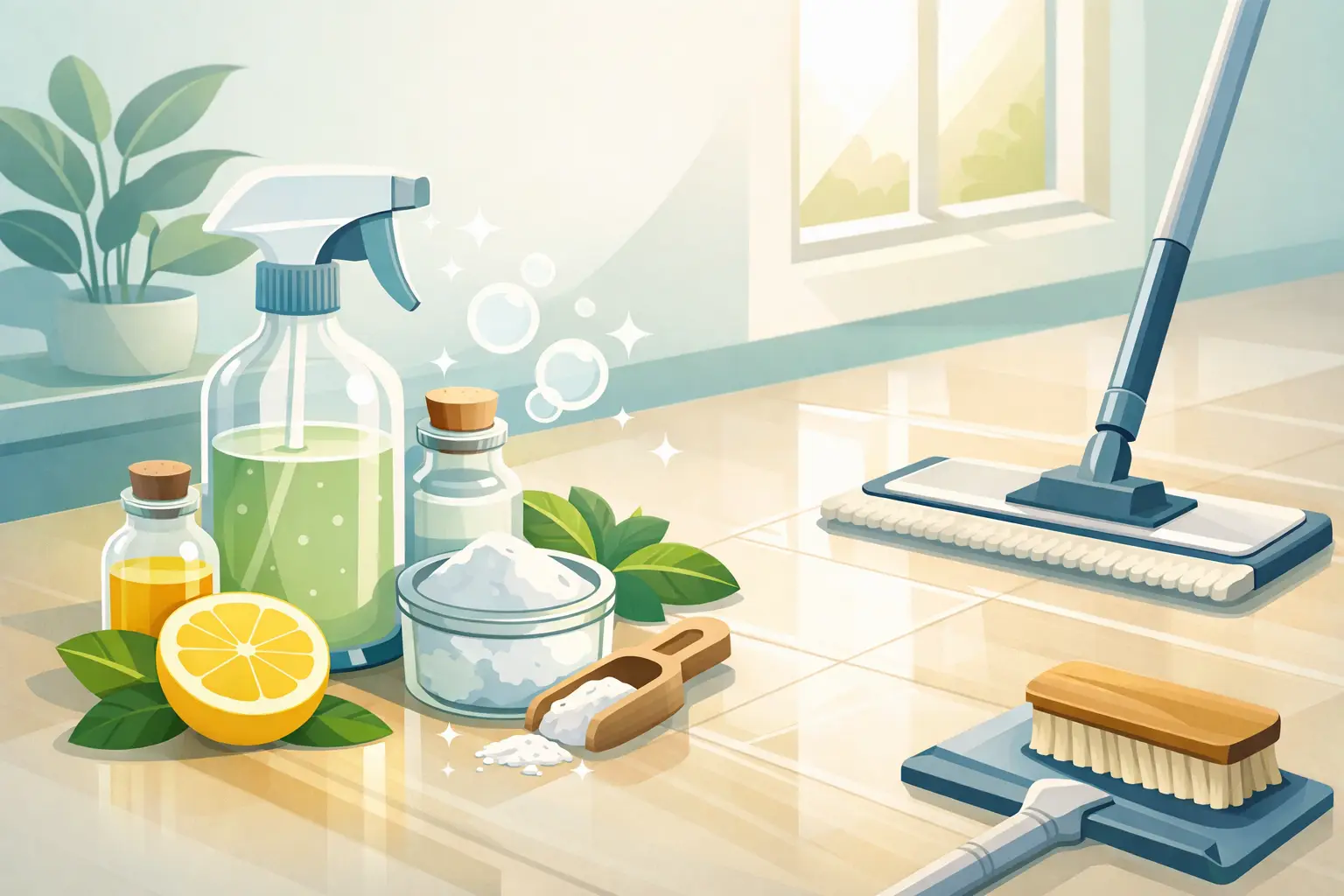
That sticky kitchen path between the sink, stove, and fridge tells the truth fast. Floors take the daily hit from muddy shoes, pet paws, food spills, and whatever gets tracked in from the yard. If you are looking for a non toxic floor cleaner DIY option, the goal is simple – get the floor clean without filling your home with harsh fumes or leaving behind a residue you would rather not have around kids and pets.
The good news is that a homemade floor cleaner can work well for many homes. The catch is that “natural” does not automatically mean safe for every floor type. The best approach is to match the cleaner to the surface, use a light hand, and avoid ingredients that cause buildup, dullness, or damage over time.
When a non toxic floor cleaner DIY makes sense
A homemade cleaner is a practical choice when you want more control over what goes on your floors. Many store products contain strong fragrances, dyes, or ingredients that can irritate sensitive households. For families dealing with allergies, asthma triggers, or pets that spend a lot of time on the floor, simpler formulas can be the better fit.
That said, DIY is not always the best answer. Some modern floors have manufacturer care instructions that specifically warn against vinegar, soap-heavy mixtures, steam, or excess moisture. If you have high-end hardwood, natural stone, or newer luxury flooring with a specialty finish, the safest cleaner may be the one recommended by the flooring brand.
The best basic recipe for sealed hard floors
For many sealed tile, vinyl, laminate, and sealed hardwood floors, a simple mix is enough:
- 1 gallon of warm water
- 1 to 2 teaspoons of a mild, fragrance-free dish soap
That is it. This surprises people because they expect a longer ingredient list. In practice, less is usually better. A small amount of mild soap helps lift dirt and oils without flooding the floor with residue.
Use a damp microfiber mop, not a soaking wet one. Mop in sections, rinse the mop head often, and go back over the floor with clean water if it feels filmy. The clean-water pass matters more than most people realize. A lot of floors look dull not because they are dirty, but because old cleaner has built up over time.
If you want a fresh scent, it is better to open windows than to overload the bucket with essential oils. Oils can leave streaks and may not be pet-friendly in every home.
A vinegar-based non toxic floor cleaner DIY – when to use it and when not to
Vinegar is often the first ingredient people reach for in a non toxic floor cleaner DIY recipe. It can help cut light grime and odor on some surfaces, but it is not universal.
A safer vinegar recipe for certain sealed floors is:
- 1 gallon of warm water
- 1 cup of white vinegar
This can work on some sealed tile and vinyl floors, especially in areas that get greasy or smell stale. It should not be your default choice for every room. Vinegar is acidic, which means it can dull natural stone like marble, travertine, or limestone. It can also wear down some floor finishes over time, especially on hardwood.
If you are unsure, skip the vinegar and use the mild soap recipe instead. It is the more flexible option for most homes.
Floor-by-floor guidance matters
Sealed hardwood
Keep moisture low and your cleaner simple. A damp microfiber mop with warm water and a tiny amount of mild dish soap is usually the safest DIY approach. Avoid soaking the floor, and avoid vinegar unless your flooring manufacturer specifically says it is fine. Too much water is often the bigger risk than the cleaner itself.
Laminate
Laminate floors do not like standing water. Use a barely damp mop and dry the floor quickly if needed. Mild soap diluted in warm water is usually a better choice than oily or waxy homemade mixtures, which can leave a cloudy finish.
Luxury vinyl plank and sheet vinyl
These floors are generally easier to clean and more forgiving. A mild soap and water mix works well for routine cleaning. Vinegar may be fine on some vinyl floors, but not all manufacturers recommend it, so it is worth checking before making it your regular cleaner.
Ceramic or porcelain tile
For sealed tile, both soap-and-water and a light vinegar solution can work. Grout changes the equation a bit because it traps dirt. If the floor still looks dingy after mopping, the grout may need separate attention rather than stronger floor cleaner.
Natural stone
Skip vinegar, lemon, and anything acidic. Stick with warm water and a stone-safe neutral cleaner. This is one area where homemade solutions can do more harm than good if you guess wrong.
Ingredients to avoid in homemade floor cleaners
There are plenty of online recipes that sound clean and safe but create problems over time. Castile soap can work in some situations, but in hard water areas it may leave a film. Baking soda is useful for spot cleaning, but it can be abrasive if scrubbed aggressively on delicate finishes. Essential oils smell appealing, but they can leave residue and may not be ideal around pets, especially if used heavily.
More is not better here. Floors respond well to diluted cleaners, controlled moisture, and frequent rinsing. Once a recipe starts including several oils, acids, and soaps at the same time, it usually becomes harder to manage, not easier.
How to get better results from any DIY cleaner
The cleaner matters, but the method matters just as much. Dry debris should come up first. Sweep, vacuum, or use a dry microfiber pad before mopping. If you mop over grit and dust, you end up moving dirty water around instead of actually cleaning.
Use two buckets if the floor is especially dirty – one for cleaning solution and one for rinsing. Change the water before it turns gray. Microfiber mops generally outperform old string mops because they hold less water and pick up more fine debris.
If a floor still feels sticky after cleaning, the cause is usually one of three things: too much cleaner, dirty mop water, or residue from past products. In that case, mop again with plain warm water and a clean pad. Sometimes the fix is subtraction, not stronger cleaner.
What homemade cleaners can and cannot do
A good non toxic floor cleaner DIY can handle routine soil, light grease, footprints, and everyday spills. It is a solid option for maintenance cleaning in busy family homes. It can also help reduce exposure to strong fragrances and unnecessary additives.
What it cannot do is solve every floor problem. Deep grout staining, old wax buildup, pet urine that has soaked into materials, mold concerns, or heavy soil from long-term neglect usually need a more targeted approach. The same goes for carpeted areas, upholstery, or indoor air issues connected to dust, vents, or moisture.
That is where homeowners sometimes get frustrated. They switch to a homemade cleaner hoping the floor itself is the whole problem, when the bigger issue is buildup, trapped odor, or contamination below the surface.
A simple routine that protects your floors and your home
For most households, the best plan is uncomplicated. Clean spills quickly, sweep several times a week in high-traffic areas, and damp mop on a schedule that matches your home. Homes with dogs, toddlers, or heavy foot traffic may need more frequent passes. Other homes can get by with less.
Door mats help more than people think. Taking shoes off inside helps even more. Those two habits reduce the amount of grit that scratches hard floors and the amount of residue you have to clean up later.
If your goal is a healthier home, floor care should support that without creating a new problem. Strong-smelling products are not the only concern. Residue, excess moisture, and using the wrong ingredient on the wrong surface can all work against you.
At RestorePro Cleaning Services, we see the same pattern in homes across Wake, Durham, and Orange Counties – people want safer cleaning choices, but they also want clear answers that actually protect their home. A homemade floor cleaner can be part of that, as long as you keep it simple and match it to the floor you have.
A clean floor should feel clean under bare feet, not slick, sticky, or heavily scented. If your DIY mix gets you there safely, keep it. If it does not, that is useful information too. The best cleaner is the one that respects both your surfaces and the people living on them.